
The Great Sichuan & Hunan Rail Loop: An Overland Adventure by Train
To see China’s best mountain peaks, ancient river towns, and bright blue lakes, take the train. This guide shows you how to connect the scenic areas of Hunan and Sichuan using China's modern high-speed and high-altitude rail networks. It is a smooth, overland journey through some of China’s most popular landscapes.
You can read the full journey below to plan your own trip, or click on any segment in the directory to jump straight to that section:
Route Directory
Segment 1: The Avatars of Zhangjiajie|Misty sandstone pillars and deep canyons.
Segment 2: Furong Ancient Town| Cliffside village sitting right over a massive waterfall.
Segment 3: Phoenix Old Town (Fenghuang) | Traditional wooden stilt houses along a misty river.
Segment 4: Chongqing | The Reality behind the Social Media Hype
Segment 5: Chengdu |Culture and Wildlife Wonders
Segment 6: Ethereal Waters of Jiuzhaigou | Turquoise lakes
Segment 7: High-altitude Huanglong| travertine pools
🧭 Shifting Perspectives: The Chongqing Pivot
Perhaps the most valuable lesson from Chongqing came from disappointment.
The reality of the city—suffocating crowds at major attractions and heavy local flavours that did not suit my palate—fell far short of the flawless cyberpunk wonderland portrayed on social media. What began as frustration, however, gradually became an opportunity to shift my perspective.
Instead of forcing myself to tick off every famous landmark, I reframed Chongqing's role in my journey. Rather than a destination in itself, it became a strategic midpoint: a place to rest, recharge, enjoy the comfort of a high-quality hotel, and take advantage of the convenience of being within walking distance of Raffles City—a familiarity I initially resented but later came to appreciate.
That change in perspective transformed the experience. The pressure to maximise every moment disappeared. I deliberately slowed down, conserved my energy, and prepared myself for the next three destinations, each of which would demand far greater physical effort and commitment.
The experience reminded me that when reality contradicts our expectations, true agility is not about forcing a situation to fit our plans. It is about having the willingness to pause, reframe, and redirect our energy toward what matters most.
In my coaching practice, I help individuals navigate similar moments of unexpected change—creating a supportive space where challenges can be reframed, new possibilities explored, and the next steps intentionally designed.
Segment 1: The Avatar of Zhangjiajie
Serving as the dramatic opening act of our Great Sichuan and Hunan Rail Loop, Zhangjiajie is a masterclass in raw vertical geography. For travelers departing from Singapore, a direct flight from Loongs Air, a low-cost carrier.
Arriving in the evening provided its own unexpected advantage. On the drive from the airport to our hotel, we passed by the fully illuminated 72 Wonders Tower. It is a truly massive structure, and in my opinion, it is best experienced from the outside at night, when the spectacular light display showcases its grand architectural scale against the dark sky.
Once on the ground, we relied entirely on DiDi for our transport. It was easily available, highly intuitive, and made our local commuting throughout the trip completely seamless. We chose to base ourselves near the Wulingyuan Forest Park entrance (the East Gate), an incredibly vibrant and convenient neighborhood within easy walking distance to a array of local eateries. On our second night, we caught a performance at the nearby Charming Xiangxi Grand Theatre. It was a spectacular, visually immersive showcase of Western Hunan’s ethnic culture and minority folklore.
Navigating this massive landscape, however, requires a strategic approach. While the national park relies heavily on facial recognition for entry, you must remember to bring your physical passport on the very first day to activate your 4-day ticket. It is also worth noting for fellow travelers that this primary ticket only covers the Wulingyuan National Reserve itself; the other highlights of the region require their own separate admission tickets.
Section 1: Wulingyuan National Reserve (Yuanjiajie & Tianzi Mountain)
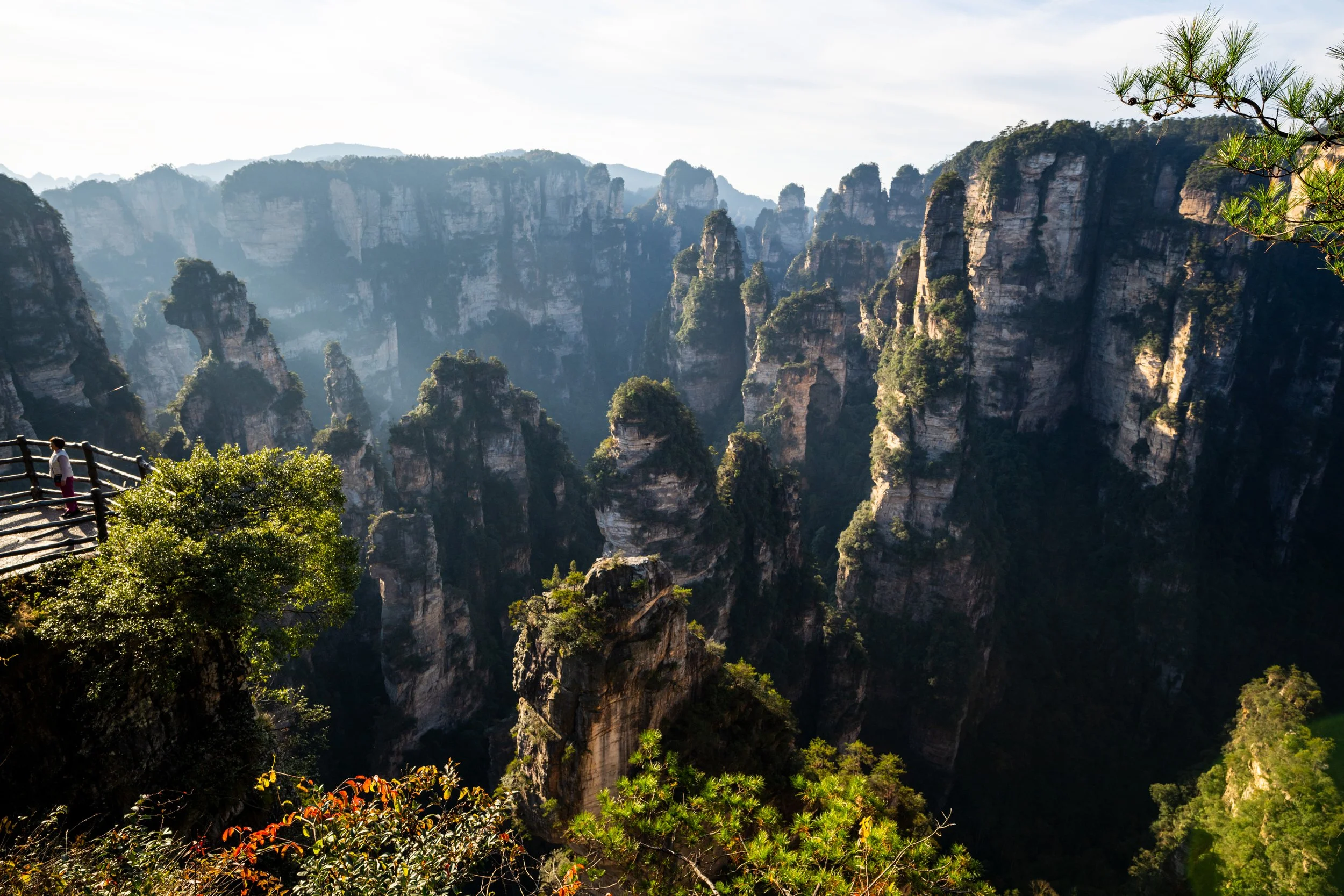
Our first proper day inside Wulingyuan was focused on Yuanjiajie and Tianzi Mountain. Yuanjiajie truly
lives up to its reputation, greeting us with the breathtaking high ridges and gravity-defying
pillars that inspired the movie Avatar, before we traced the high ridges over to the cloud-piercing
spires of Tianzi Mountain.
But the sheer scale of the terrain is no joke. Even though I tried my absolute best to minimize my
physical exertion by utilizing the park's famous elevators and the built-in eco-shuttle buses
(which are conveniently included in the ticket price), be prepared for serious walking. I clocked
over 15,000 steps on this first day alone.
Section 2: Zhangjiajie Grand Canyon & The Glass Bridge
On our second day, we opted for a complete shift in scenery and perspective by heading to the Zhangjiajie
Grand Canyon. Located roughly a 40-minute drive from our Wulingyuan base, it requires a separate
admission ticket from the main national park pass.
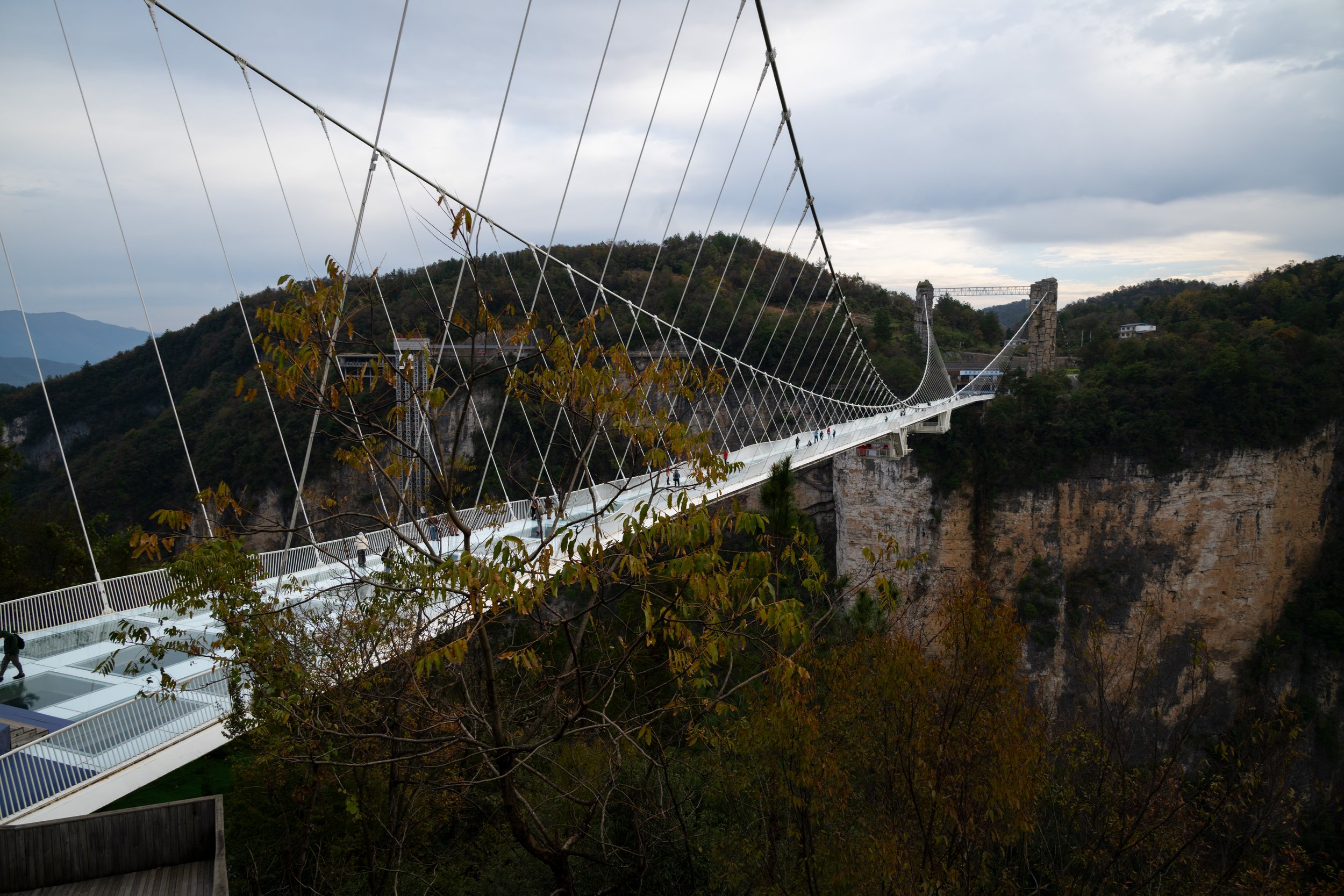
This site offered a thrilling contrast to the high ridges of the day before. The highlight here is walking
straight across the famous Glass Bridge—a massive, transparent structure suspended high over the
canyon floor that gives you an unobstructed, dizzying view of the gorge below.
Section 3: Tianmen Mountain
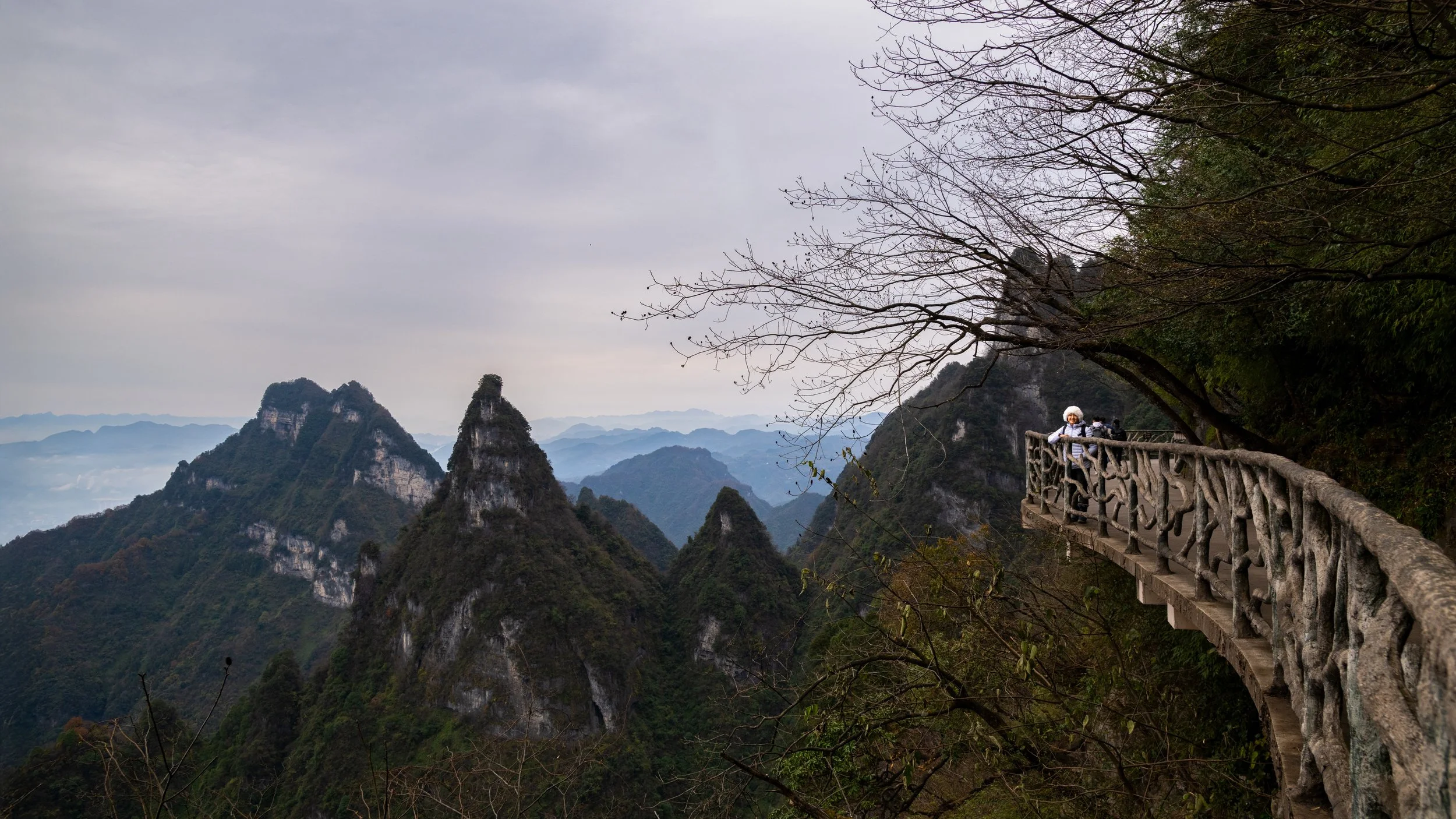
The grand finale of our Zhangjiajie chapter was Tianmen Mountain, located about 50 minutes away from Wulingyuan via DiDi. This place requires its own dedicated admission ticket and is an absolute must-visit. To reach the iconic peak, you are presented with a choice: climb exactly 999 steep, open-air steps along the cliffside, or ascend via the massive tunnel escalators built straight through the core of the mountain.
I chose to take the escalators. It is a staggering engineering feat split into 12 distinct segments, carrying you smoothly through the rock. However, opting for the escalators doesn't mean you escape the physical demands of the mountain. The walking round on this day was still very substantial—a massive repeat of the endurance required on Day 1. Once the escalators unload you at the top, you emerge onto an expansive, sweeping mountaintop plateau with a massive network of cliffside trails, glass skywalks, and scenic loops left to explore.
Section 4: The Curious Lens Reflection
Reflecting on this leg of the journey through the lens, Zhangjiajie left a deep impression. Though it is undeniably touristy, the entire region is exceptionally well-organized. The seamless logistics and modern transport infrastructure make navigating this rugged, ancient terrain incredibly pleasant. It masterfully combines modern-day comfort with raw, spectacular nature, making it undeniably worth the visit.
Segment 2: The Waterfall Village of Furongzhen Ancient Town
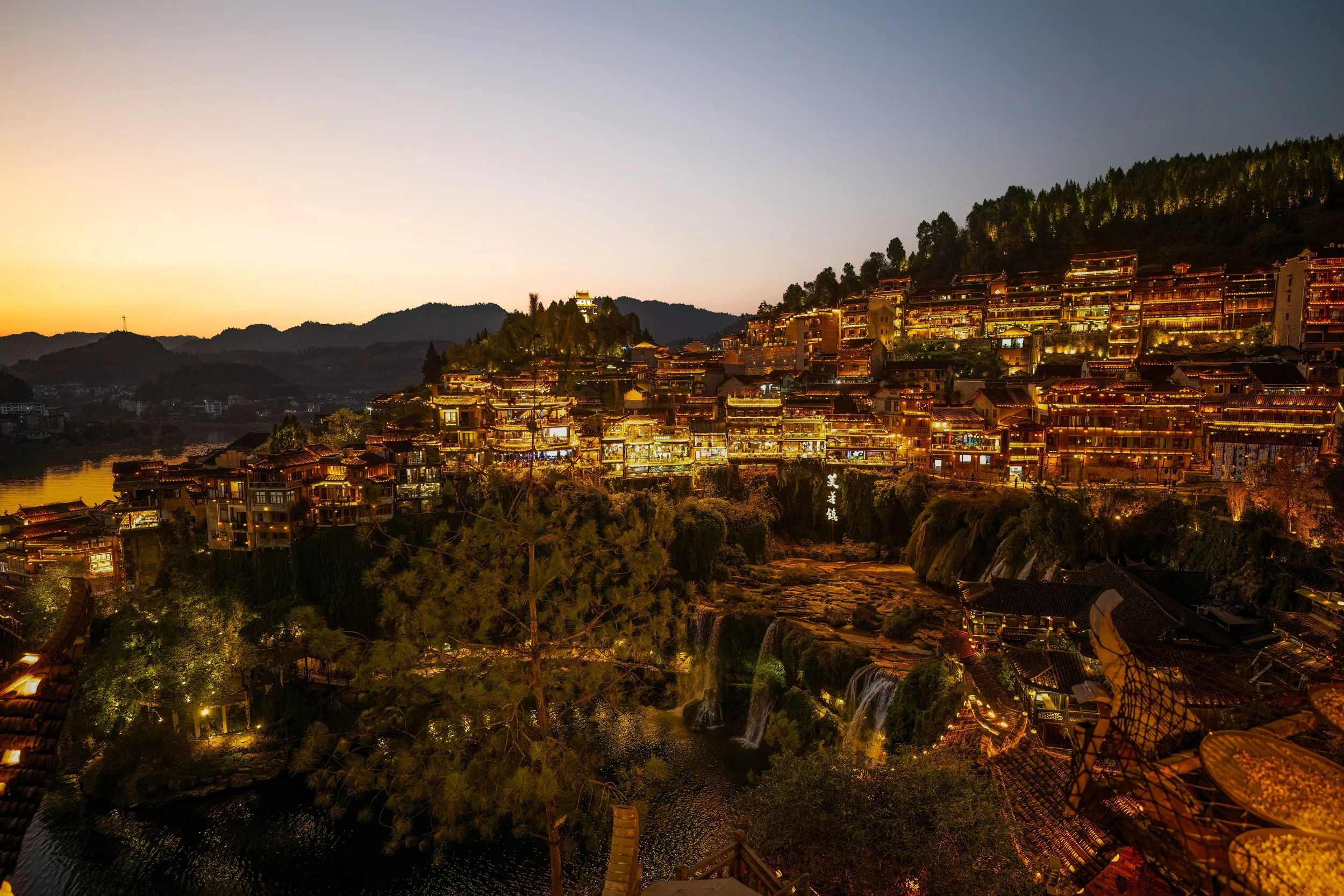
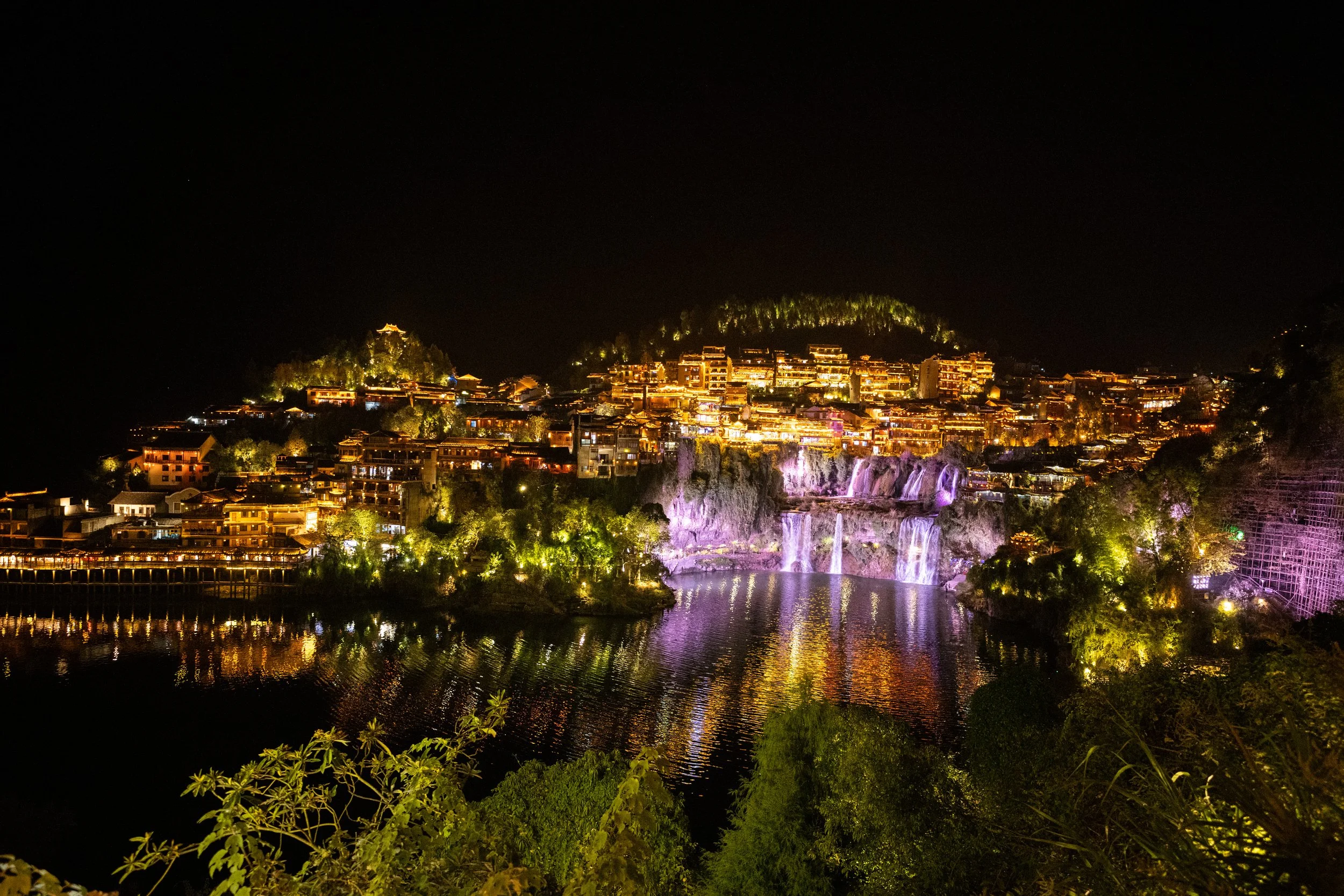
Aside from the monumental peaks of Zhangjiajie, my absolute favorite destination on this entire journey was Furong Town (芙蓉镇). It is a place of pure cinematic magic—a dramatic, ancient settlement seemingly frozen in time, perched precariously over plunging waterfalls.
The Transit & Basecamp
The HSR Connection: Moving from Zhangjiajie to Furong is incredibly efficient. We boarded the High-Speed Rail (HSR) from Zhangjiajie West Station to Furongzhen Station, a swift and smooth journey that takes just about 40 minutes.
The Final Stretch: Upon arrival, a short and easy DiDi ride takes you from the modern train station straight to our hotel.
A Strategic Stay: We chose to stay just outside the historic core, positioned partially to overlook both the ancient town and the winding river below. While many travelers may book hotels directly overlooking the famous waterfall, which can be expensive and noisy with loads of tourist in the evening.
The Strategy: Chasing the Dusk Light
When planning your rail itinerary, a single day is entirely sufficient to capture the magic of Furong. The key is in the timing of your arrival:
The Golden Hours: Aim to arrive with at least a few hours of daylight left. This gives you ample time to navigate the narrow, cobblestone alleys, appreciate the traditional Tujia stilt houses (Diaojiaolou), and get your bearings before the environment shifts.
The Twilight Metamorphosis: The true beauty of Furong reveals itself at twilight. As dusk falls, the entire cliffside town ignites in a brilliant display of lights, reflecting off the rushing waters.
The Perfect Vantage Point: I chose a restaurant boasting the absolute perfect vantage point. Although the restaurant itself was crowded, it secured us the best seat in the house to overlook the waterfall. Sitting there, enjoying a local meal while watching the waterfall glow under the changing lights, was an unforgettable visual experience to capture through the lens.
Late-Night Creative Freedom: Because the town’s spectacular lights stay on until well past 11:00 PM, there is absolutely no need to rush your evening. You will have ample time to wander the streets long after dinner is over, taking advantage of incredible photographic opportunities that no traveler should miss.
Segment 3: Phoenix Old Town (Fenghuang)
The journey from Furongzhen to Fenghuang Ancient Town (Fenghuang Gucheng) is an effortless high-speed rail (HSR) connection, moving you smoothly between two of Hunan's most iconic historic waterscapes.
Essential Arrival Logistics
The Distance: Fenghuang Gucheng Railway Station sits roughly 10 kilometers outside the ancient old town. Bear in mind that there is no DiDi in Fenghuang. Here, You must rely on metered taxis or airport shuttle.
Direct Shuttle Bus: Departs directly from the station and routes straight to the main bus terminal outside the Gucheng boundaries. Thereafter you need to walk about 15 minutes to the gate.
Local Taxi: Available at the station for a direct drop-off at the old town gates.
Heading to the Hotel
Traveler's Tip: Cars are strictly forbidden inside the historic pedestrian zones of Fenghuang Gucheng. If your hotel is located deep inside the old town, you will have to haul your luggage over cobblestones and traditional footbridges.
Booking a hotel situated just outside the Gucheng perimeter is what we did. Taking the direct shuttle bus brought us to the main bus terminal which is less than 10 minutes walk to our hotel. Our hotel, Hongqiao Story Homestay, gave us a complementary return ride to the train station.
If you do choose an atmospheric inn inside the town walls, always coordinate with your hosts in advance—many premium boutique stays will arrange a porter with a handcart to meet you at the outer drop-off gates. Staying outside the old town, on the other hand, allows transport to stop right in front of your hotel.
The Two Faces of Phoenix Town
Spending two full nights in Fenghuang is the optimal rhythm. It grants you the time needed to peel back the layers of what is undeniably one of the most visually stunning ancient towns (Gucheng) in China, without feeling rushed by the evening crowds.
The Daytime: A Quiet, Scenic Haven
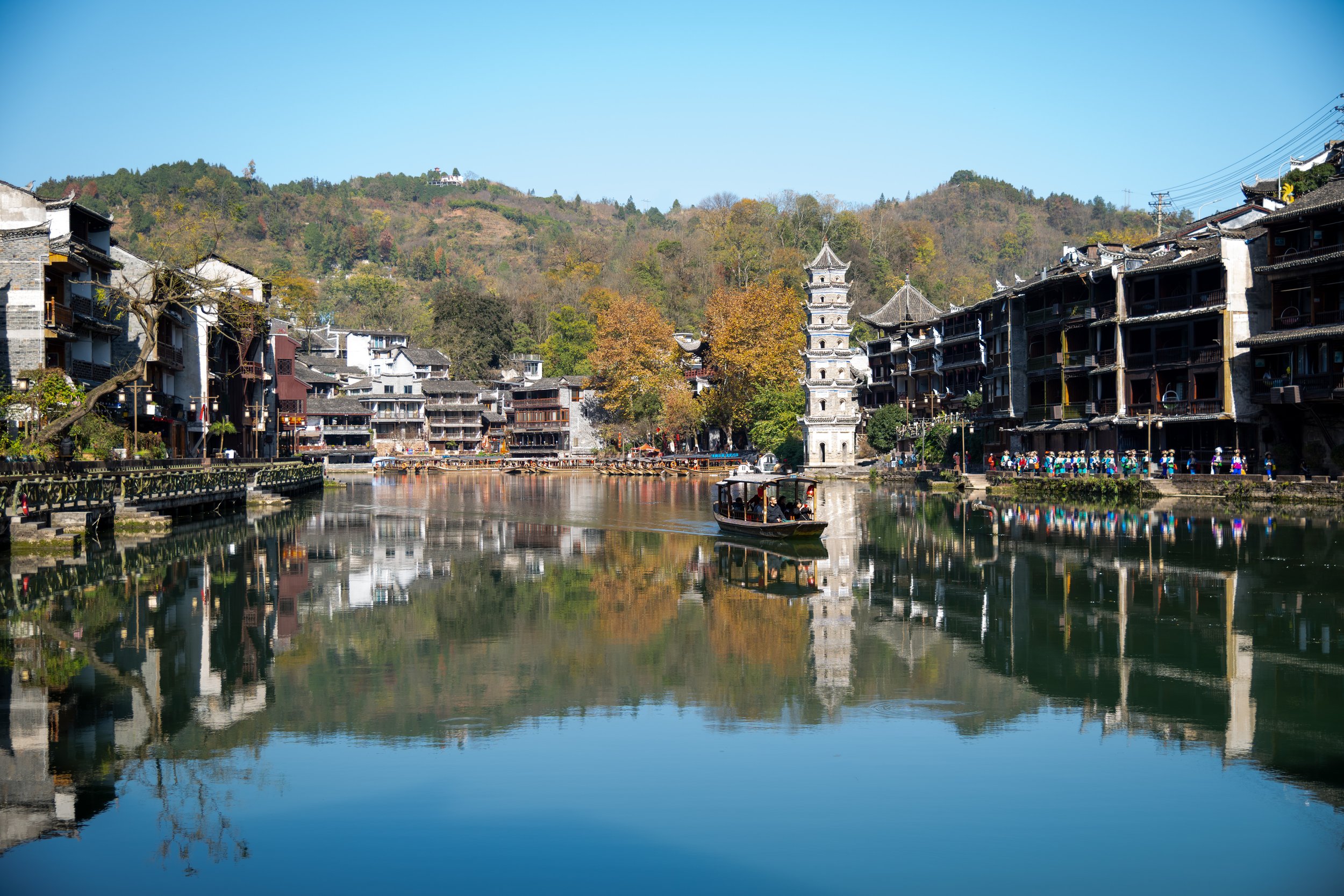
While social media heavily focuses on the bustling nightlife, the daytime is secretly Fenghuang’s best-kept secret. As the late-night crowds sleep in, the morning and afternoon hours turn exceptionally pleasant, slow-paced, and quiet.
The Alleys: The narrow stone paths and traditional wooden facades are practically quiet, allowing you to appreciate the authentic architecture and history.
The Elevated Dining Strategy: Instead of settling for a ground-level stilt house restaurant right on the main drag, walk further down the riverbank and find a restaurant with a second-floor dining area. Sitting upstairs rewards you with a magnificent, wide panoramic view of the Tuojiang River, completely removed from the bustle below for a truly quiet and undisturbed lunch.
The Nighttime: Drama, Light, and Commercial
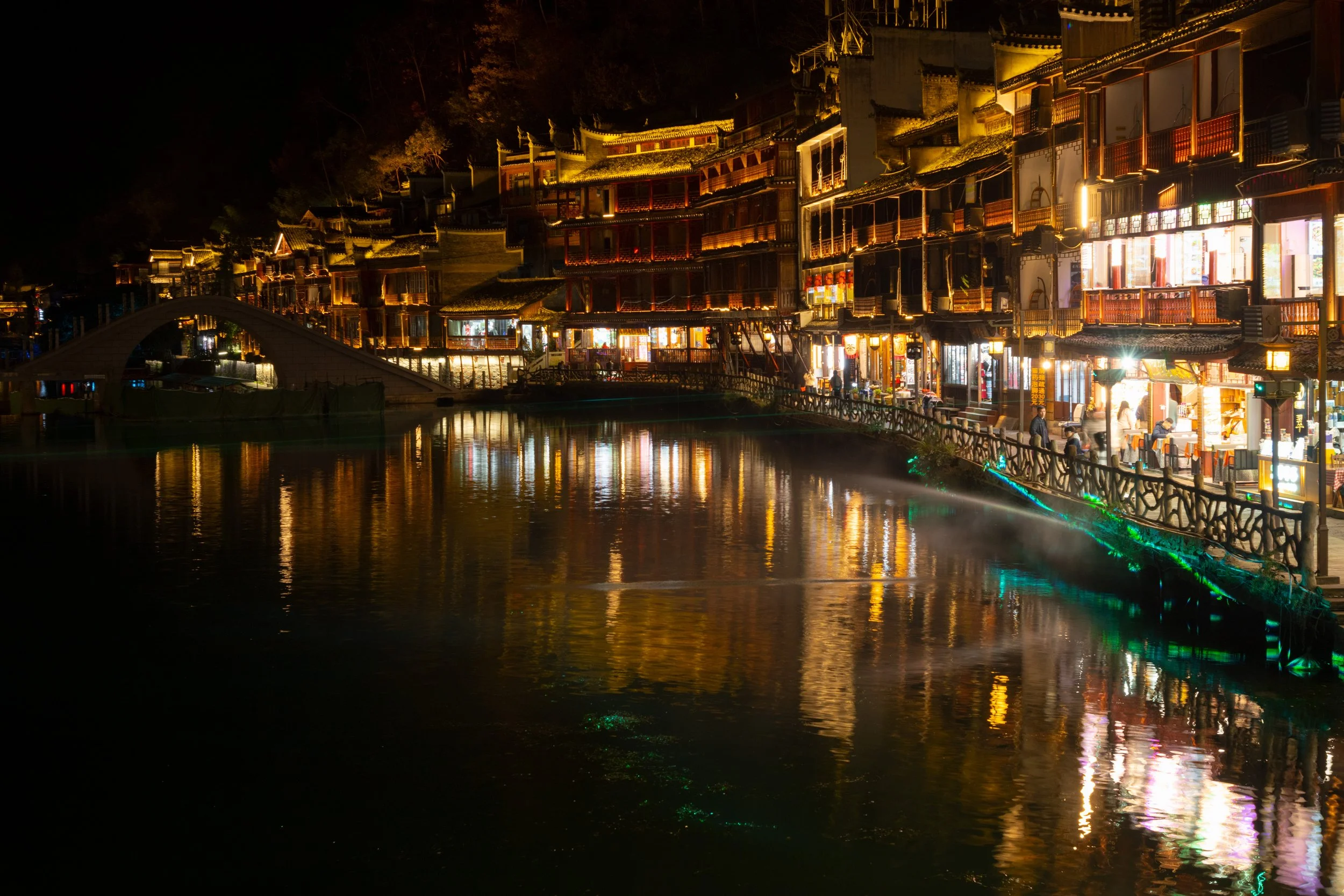
As dusk falls, Fenghuang completely transforms into a high-octane sensory experience. The evening scene brings an unmistakable "ra-ra" energy—vibrant, commercial, and crowded—but visually spectacular for a photographer.
The Connecting Bridges: The various footbridges connecting the two side streets across the river are the premier spots for night photography. Standing on these bridges gives you a straight, unobstructed line of sight down the river to capture the glowing stilt houses and water reflections.
Crowd Awareness: Take extra note of the dense crowds when taking pictures on these bridges. Because they serve as the main pedestrian arteries between the two banks, there may be bottlenecks in the evening.
Segment 4: Chongqing – The Reality behind the Social Media Hype
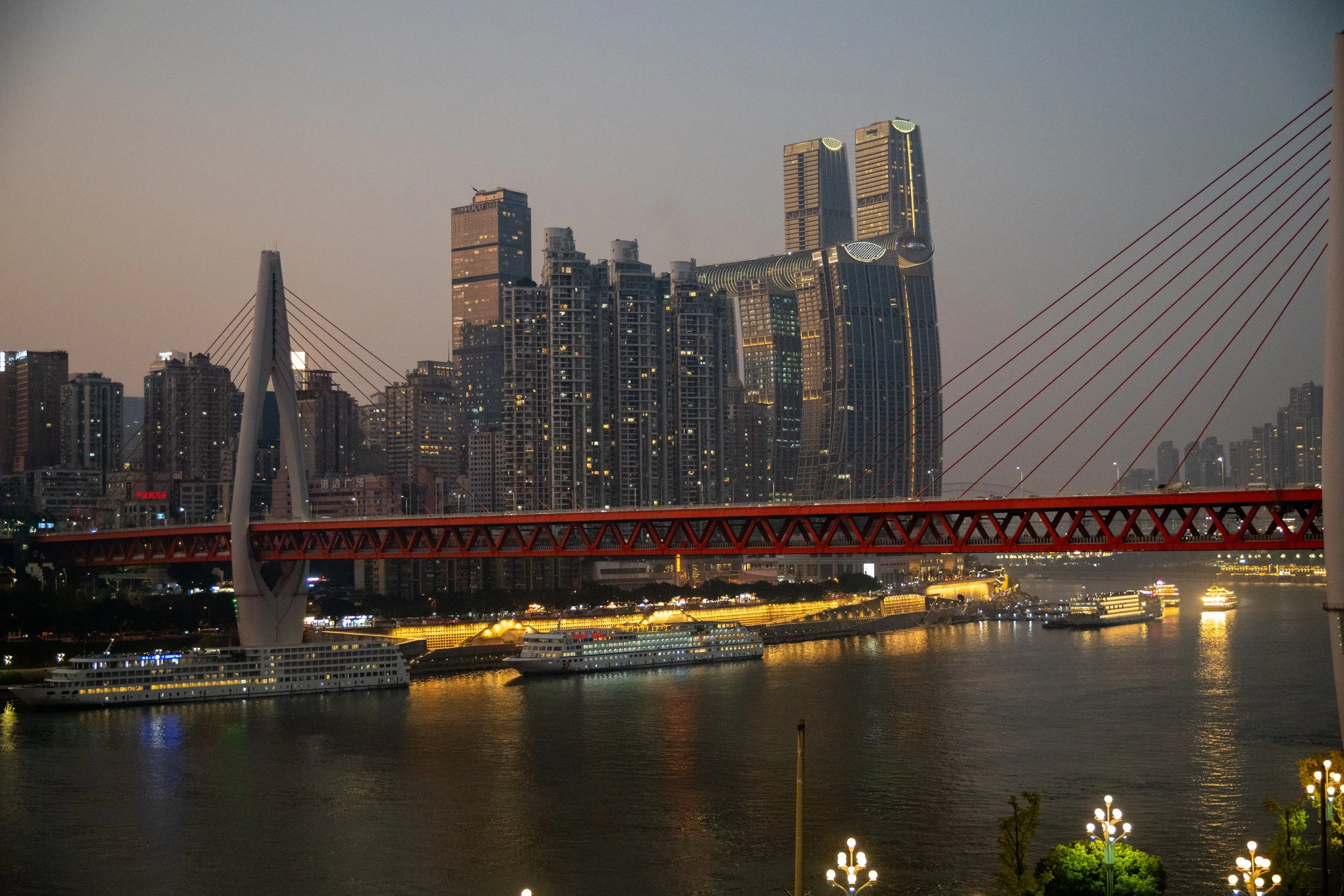
Chongqing was selected as a major stop on our itinerary largely because of its immense popularity on social media. However, it quickly became my least favourite city of the journey—not because of the city itself, but because of the overwhelming crowds.
Even during an off-peak period, popular attractions such as Hongyadong and the Qiansimen Bridge were packed with visitors. In the evening, we have to inch forward through a sea of people while navigating relentless hawkers and tour touts. We also visited Jiefangbei Pedestrian Street, the commercial heart of Chongqing, where dozens of mega malls compete for attention amid an endless stream of shoppers. A short walk away is the Yangtze River Cableway terminal, where a ride across the river do offers impressive views of the city's skyline.
Faced with the constant crowds, we eventually adjusted our expectations and treated Chongqing less as a sightseeing destination and more as a strategic rest stop—a place to recharge before continuing to the next stage of our journey.
Transit: HSR Business Class
The Cabin: It is highly advisable to upgrade to Business Class. The cabin is incredibly exclusive, usually containing only 6 seats total (and often empty) with large windows, ensuring a quiet and private environment.
The Perks: Seats fold completely flat into beds. Tickets include complimentary meals, snacks, and non-alcoholic drinks.
VIP Ground Service: Includes a priority check-in lane, private lounge access, and a personal escort from the lounge directly to the train platform, completely bypassing the massive station queues.
The Rest & Shopping Strategy
Lodging Tip: We stayed at an Atour Hotel, a local hotel chain (note that there are several branches in town), which offered an easy walk around the central area.
Raffles City Sanctuary: For a needed break from the intensely spicy, oily, and heavy portions of authentic Sichuan hotpot, head to the massive Raffles City complex. It is excellent for modern shopping and offers great culinary variety when you want to reset your palate.
Liziba Monorail: The famous train passing through a residential building is worth seeing, but we view it briefly on our way from the train station to the hotel.
Segment 5: Chengdu – Cultural Rhythm and Wildlife Wonders

Moving from Chongqing to Chengdu via the High-Speed Rail network is incredibly straightforward. With numerous departures throughout the day, the smooth journey takes a mere one hour, delivering you into a city with a distinctly more pleasant, relaxed, and localized charm.
Wildlife & Cultural Pacing in Chengdu
Chengdu offers a balance of wildlife viewing and immersive local culture, standing out as a highlight of the region.
Chengdu Research Base of Giant Panda Breeding : Situated just 10 kilometers north of central Chengdu, this sanctuary is incredibly easy to access. Beyond observing the iconic Giant Pandas, the base offers the wonderful privilege of seeing active Red Pandas climbing through the foliage—a genuine delight for wildlife lovers.
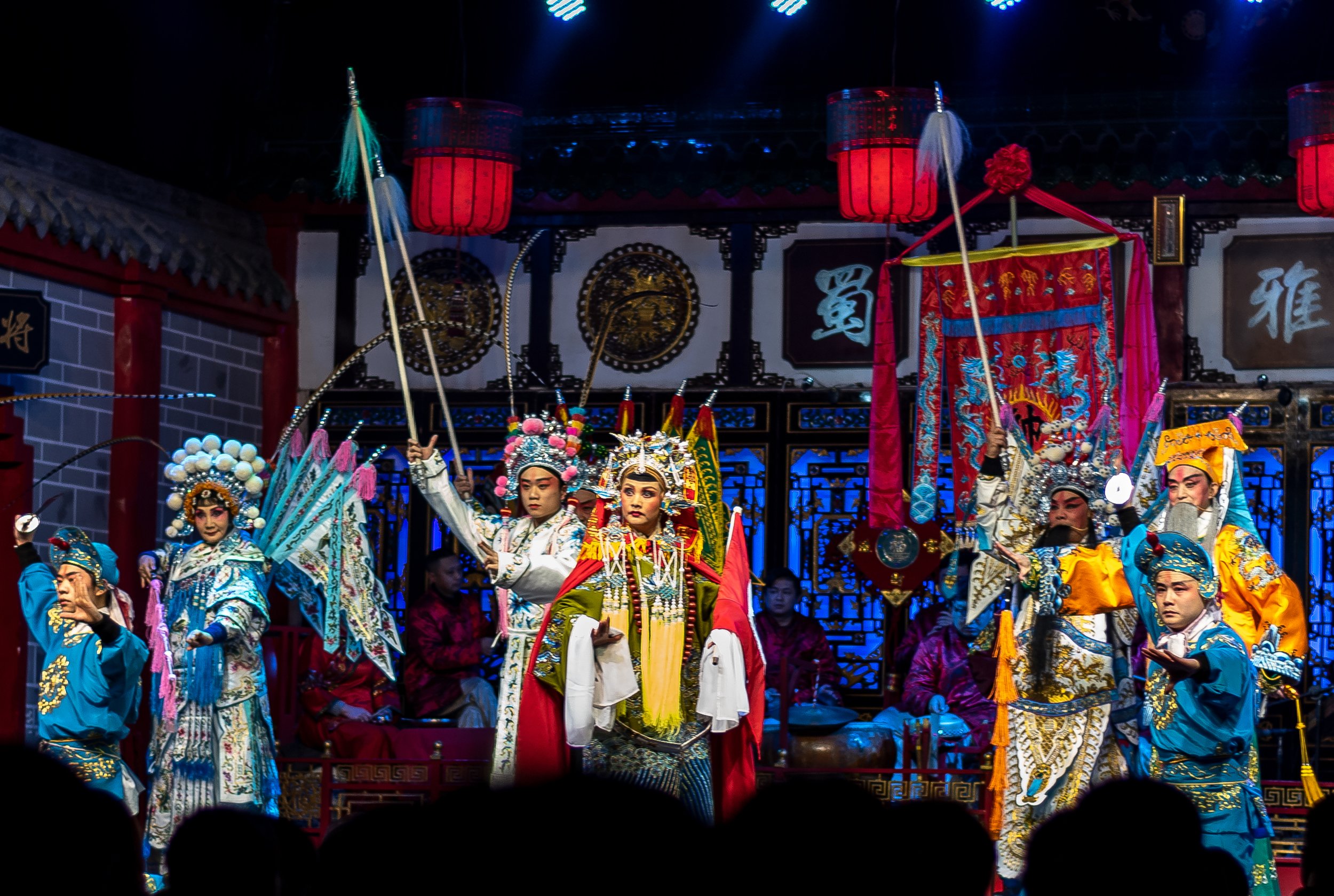
Sichuan Opera & Face Changing : Attending a traditional Sichuan opera performance featuring the rapid, mesmerizing art of Bian Lian (Face Changing) is a must. The venue is just a short DiDi ride away from Dorsett hotel, where we stayed, and it is highly recommended to have your hotel secure tickets in advance. Having assigned seating ensures a comfortable, stress-free experience where you can completely relax, enjoy local snacks.
Half-Day Side Trip: Leshan Nature
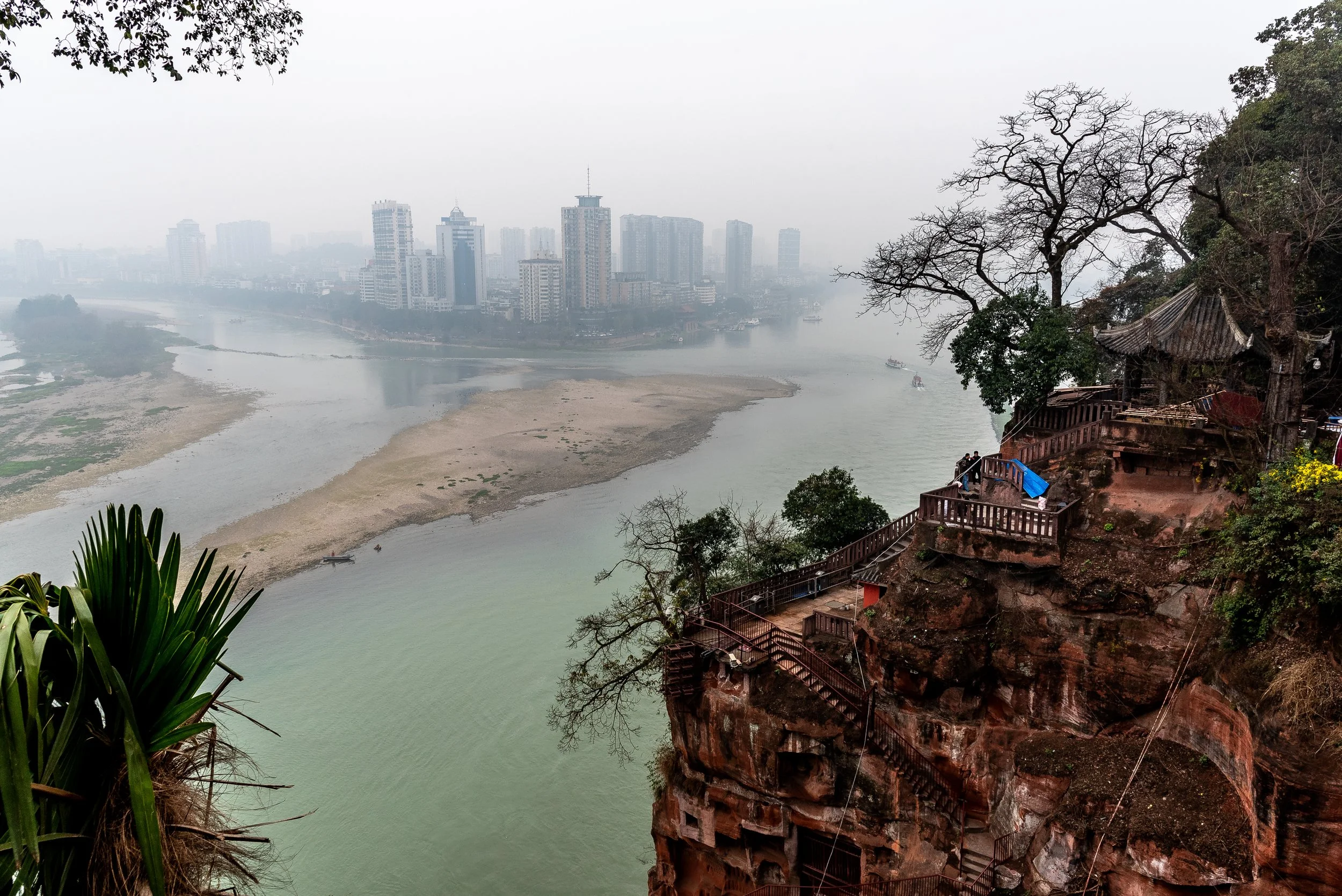
An easy high-speed rail excursion from Chengdu down to Leshan makes for a highly efficient half-day itinerary. This side trip is dedicated entirely to stunning nature and witnessing the colossal, historic Leshan Giant Buddha carved directly into the cliff face.
Culinary Recommendation: Authentic Sichuan Classics
We had one of our dinner at Chen Mapo Tofu (Luomashi Branch) which I would like to recommend. It is tucked away on a quiet side street, When I entered, I had the distinct feeling of being transported into an old Chinese inns —a place where time seemed to slow down and the atmosphere carried a sense of nostalgia.
We ordered the signature tofu, which is widely recognized as the birthplace of its legendary namesake dish. While the fiery, numbing tofu is the centerpiece, the restaurant serves an array of other classic Sichuan dishes and small plates that are absolutely worth a try to experience the true depth of the local cuisine.
Section 6: Ethereal Lakes of Jiuzhaigou National Park
Arrival Logistics & Seamless Transfers
The HSR Advantage: Traveling from Chengdu is incredibly straightforward thanks to the high-speed train line. When purchasing tickets, remember to select Huanglong/Jiuzhai Station as your destination. Alternatively, you may arrive at Songpan station. Both stations serve the two national parks conveniently.
Hotel Shuttles: Upon exiting the train station, there are several dedicated shuttle buses lined up to transport passengers directly to the primary hotel clusters in the area.
Booking Tip: If you are traveling during the off-peak shoulder season (as we did), you can easily purchase your shuttle tickets on arrival. Advance booking is only necessary if you find yourself traveling during peak holiday windows.
Many hotels do provide free transport to the entrance of the national park at regularly intervals. Check the timing with the hotels.
Seasonal Experience: Late Autumn into Winter
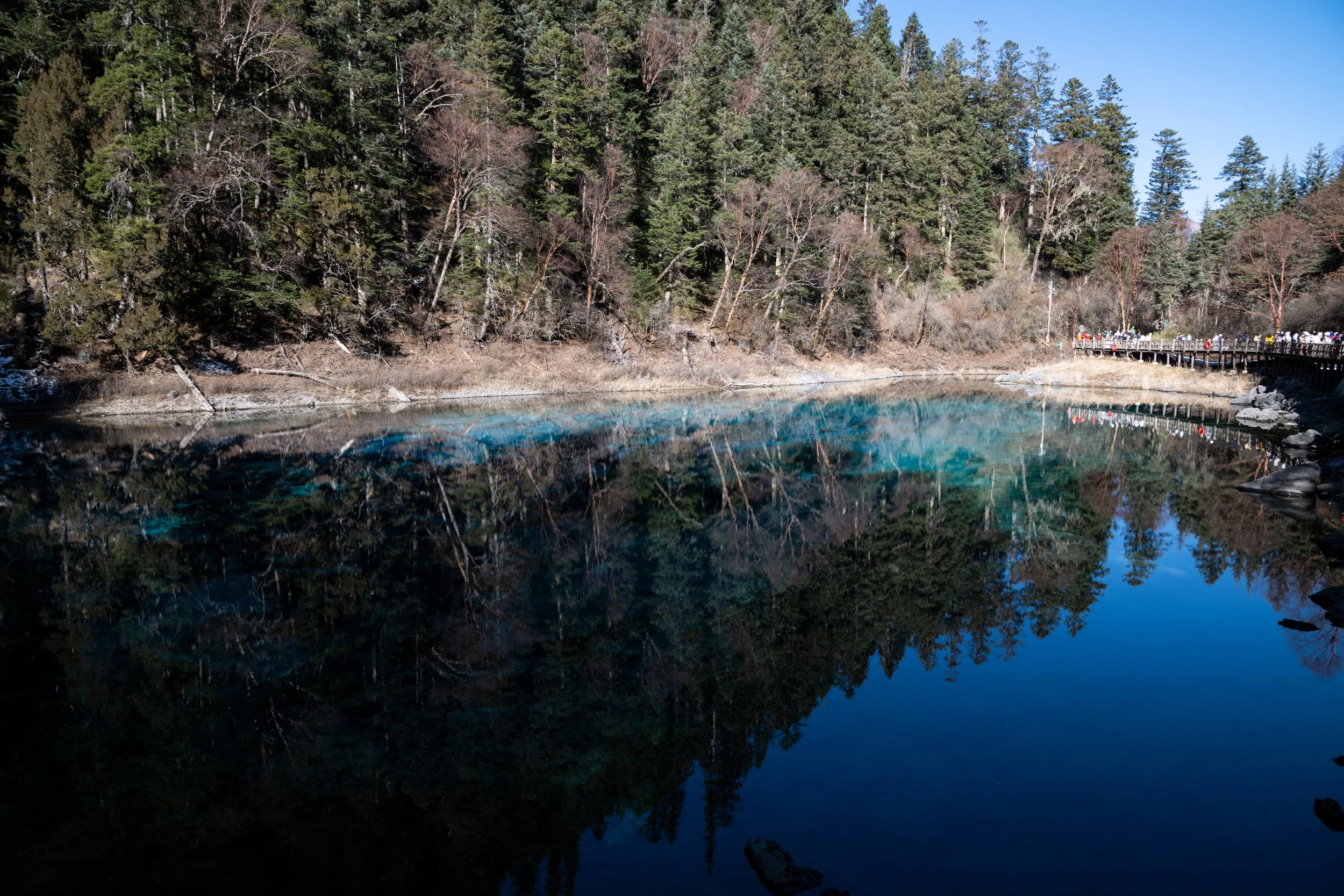
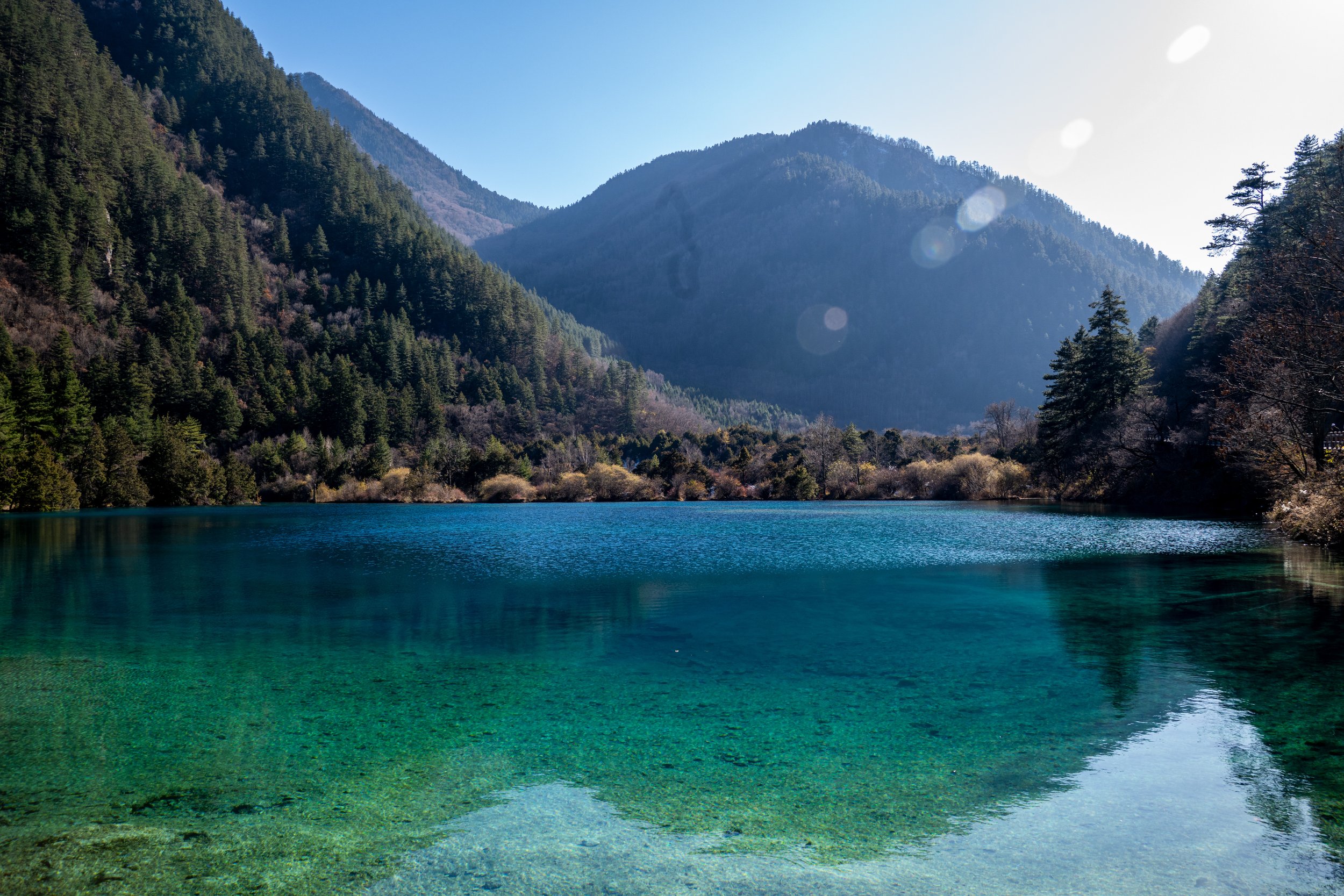
The Landscape: Visiting in late November/early December means the iconic, fiery autumn foliage colors have already departed for the year. However, the trade-off is still rewarding.
The Crowd Factor: While the park remains consistently popular, the massive peak-season tour groups are gone, making the crowd levels highly bearable.
Time Management: Spending one full day inside the park is very sufficient to take in the main highlights,, allowing you to move at a relaxed pace without the stress of overwhelming lines.
Flawless Internal Infrastructure
Much like Zhangjiajie, Jiuzhaigou stands out as an exceptionally well-organized and highly coordinated biosphere. The entire park layout features a massive, continuous loop serviced by an efficient fleet of internal sightseeing shuttle buses.
Section 7: High Altitude Huanglong National Park
Scenic Transitions & Luggage Management
The Route: Traveling from Jiuzhaigou to Huanglong is best managed via private transport. Having the hotel arrange a direct vehicle made for a smooth, exceptionally scenic mountain drive.
The Pitstop: The vehicle dropped our luggages off first at the hotel in Chuanzhusi Town before driving directly onward to the Huanglong Scenic and Historic Interest Area gates, keeping the exploration light and baggage-free.
Facing the Altitude at Huanglong
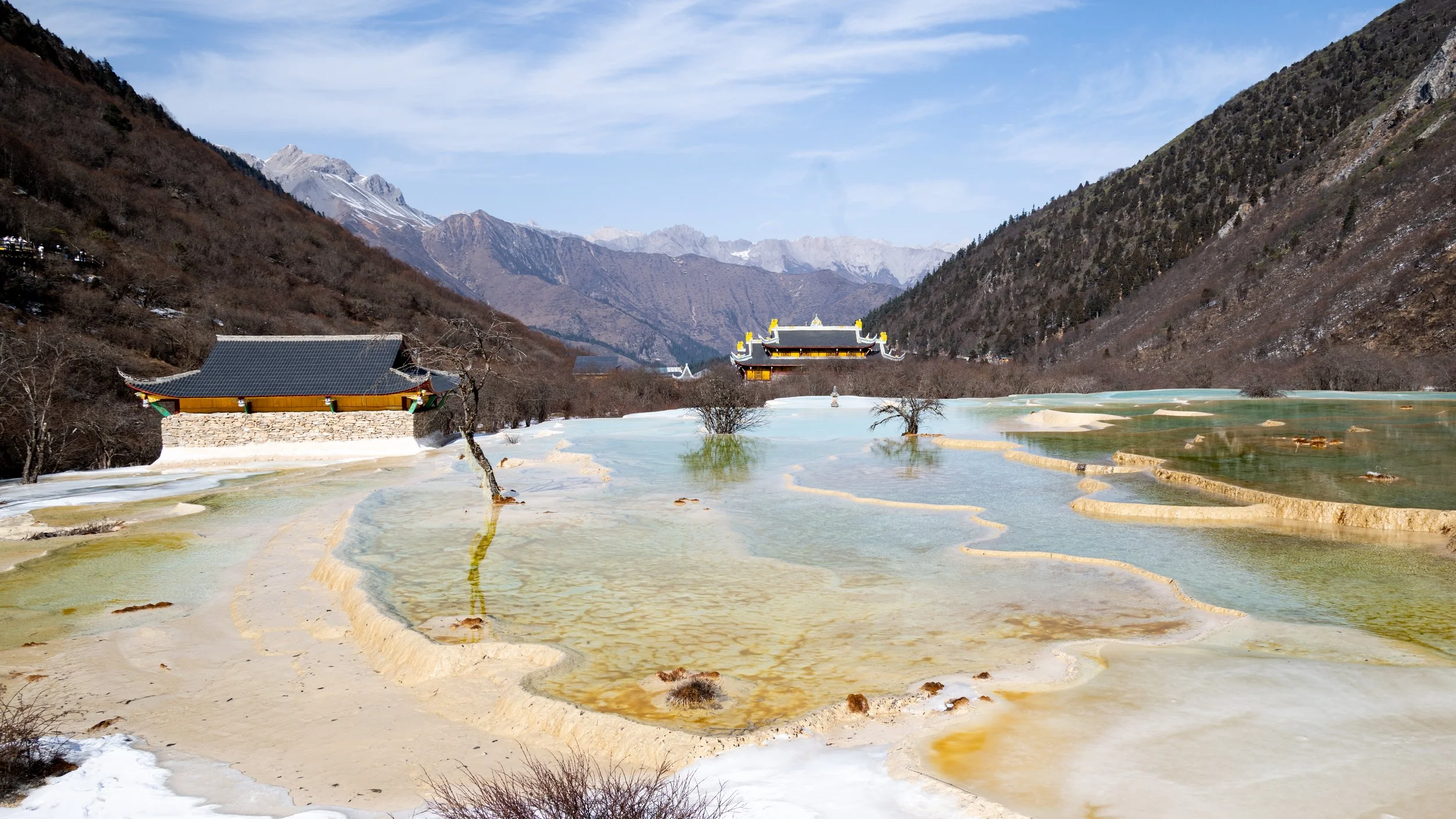
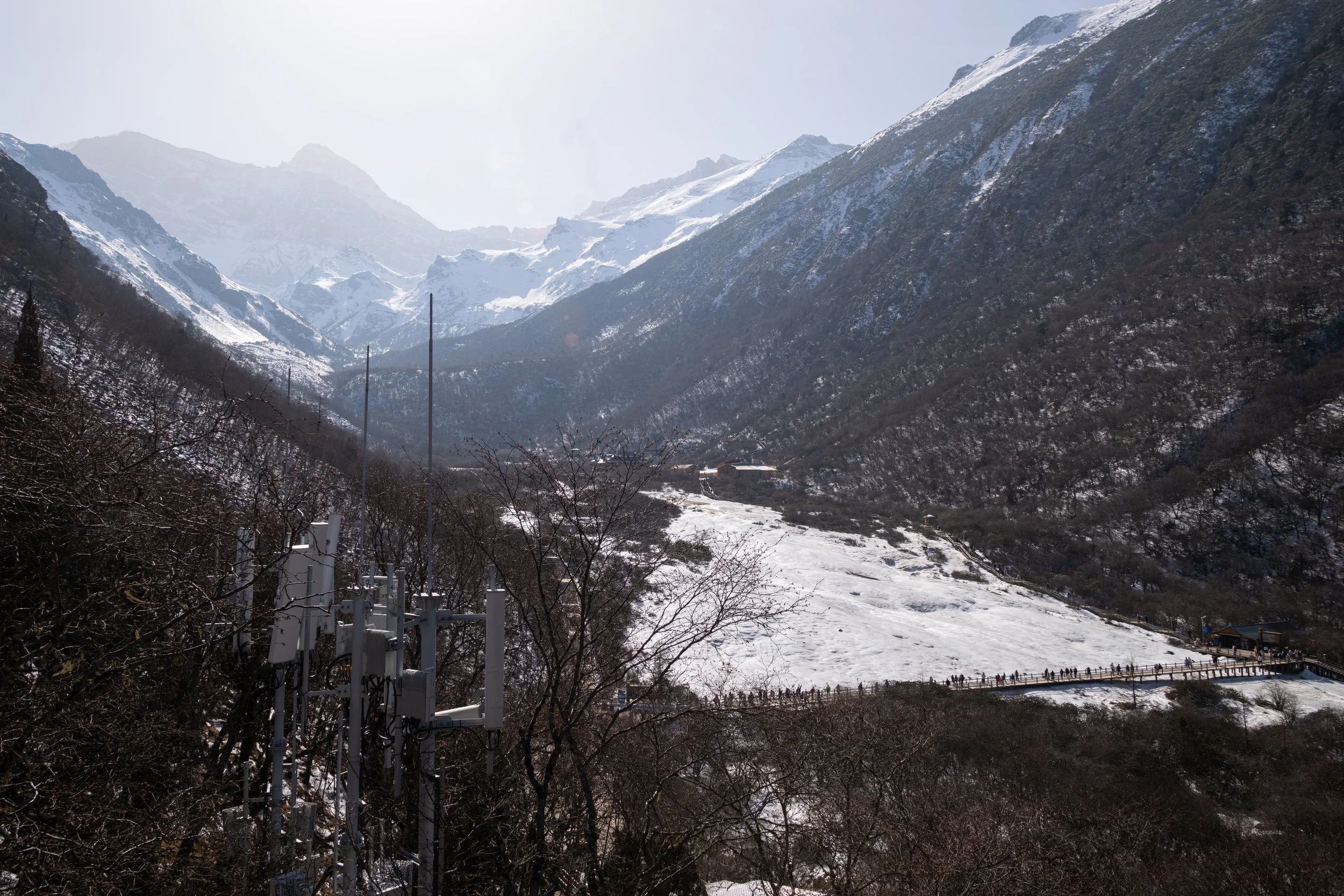
The Elevation Shift: The altitude at Huanglong is significantly higher than Jiuzhaigou, climbing rapidly well past 3,100 meters (over 10,000 feet) above sea level. At this elevation, thin air is an immediate factor; it is vital to consciously slow down your walking pace to prevent altitude sickness.
The Transit Loop: To conserve energy, the optimal path is taking the two-way ropeway (cable car) combined with the internal electric shuttle cart system to get as close as possible to the iconic Five-Color Pond. Both transportation are excluded from main ticket price.
The Walking Reality: Bear in mind that even with the ropeway and electric carts, significant walking on foot with stair climbing is still required to actually reach, view, and appreciate the tiered pools.
An Honest Traveler’s Perspective
Frankly, if you have already spent a full day exploring the expansive, vibrant waters of Jiuzhaigou, there is a very valid option to skip Huanglong entirely. While the calcified terraced pools are unique, the high-altitude physical strain and the nature of the scenery (especially during this season when the water is not full) mean it may not feel essential after seeing Jiuzhaigou's superior lakes.
Evening Base: Chuanzhusi Town
Returning to Chuanzhusi Town for the evening revealed a place that was very, very quiet during the off peak season. While the streets were completely devoid of crowds, the town still offered a few limited, cozy local restaurant options to secure a warm dinner before resting. The next morning, it was a short didi ride to the train station.
Section 8: Practical Insights and Travel Tips
Navigating China’s digital landscape and massive transport network requires a few strategic tools. Based on this journey, here are the essential tips to ensure a smooth, stress-free travel.
1.Digital Payments & Exchange Rates
The Set-Up: Download WeChat and Alipay before your trip. Cash is rarely used, and these two apps are the universal payment method across mainland China. Both can be linked directly to your international credit or debit cards.
Card Suggestion: Link a multi-currency card like Wise or Youtripor a dedicated travel card to secure the best possible live exchange rates.
The 200 RMB Rule: Keep a close eye on your transaction totals. While smaller purchases are seamless, any transaction exceeding 200 RMB will incur a automatic 2% service fee from the app platform.
2. Booking Infrastructure
The Platform: For seamless coordination, I use Trip.com to book most of the local chain hotels and high-speed train tickets.
The Value: While the app charges a service fee, it is reliable for international travelers and provides a flawless, single-screen English overview of your entire itinerary, confirmations, and ticket statuses.
3. Managing the Crowds: The Reality of Chinese Tourism
The Golden Rule: In China, destinations are either crowded or very crowded at any given point of time.
Early Starts Are Mandatory: Even when traveling during the supposedly "non-peak" winter window (mid-to-end of November), world-class attractions like Jiuzhaigou National Park and Zhangjiajie draw immense numbers of domestic travelers. To appreciate the natural beauty peacefully before the major tour groups descend, always plan to start your day as early as possible.
4. High-Speed Rail (HSR) Ticket Strategies
Demand: Because of the limited seats on the premium cabins, Business Class and First Class train tickets can get snapped up incredibly fast the moment they are released onto the official system.
The Last-Minute Release Strategy: If your desired train appears completely sold , check the app again 1 to 2 days before your actual travel date—this is the window when slots may be available again particularly for the exclusive Business Class cabins.
5. The "Do Not Travel" Calendar: Avoiding the Golden Weeks
If you want to experience China's top-tier nature and culture with your sanity intact, you must plan your dates defensively. Completely avoid scheduling your trip during China's three massive national holiday windows, known as the "Golden Weeks."
During these stretches, transport grids lock up, prices skyrocket, and top attractions become overwhelmingly packed.
Chinese Lunar New Year (January or February) - (Varies by lunar calendar)A massive 7 to 9-day holiday stretch. Massive rail closures and closed local shops.
May Day Holidays (May 1st to May 5th) - A high-density 5-day holiday. Spring weather drives enormous domestic crowds out into the national parks.
China National Day (October 1st to October 7th) A massive 7-day holiday. This is the absolute peak travel window of the year—parks like Jiuzhaigou and Zhangjiajie reach absolute capacity.